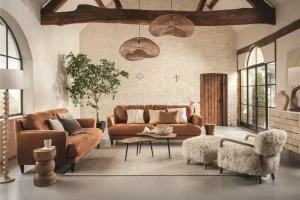

How to Mix Wood Tones for a Warm, Cohesive Home
- Home
- Single Blog

How to Mix Wood Tones for a Warm, Cohesive Home
Your dining table, floor and favourite chair do not need to be exactly the same shade of wood. A room can feel beautifully connected even when its furniture has been collected over time.
The challenge is finding a relationship between those pieces. With a little attention to colour, proportion and texture, different wood finishes can bring depth to a room while allowing each piece to keep its character.
Find the Wood Tone That Leads the Room
Look at the largest wooden surfaces first. Your flooring, built-in cabinetry or dining table may already establish the room’s main tone.
Treat that surface as your starting point. If you have pale timber flooring, for example, consider how a medium or darker table would sit against it. If dark cabinetry dominates the room, lighter furniture may provide a welcome visual break.
You are choosing a reference point, rather than a colour that every future purchase must match.
Pay Attention to Undertones
Beyond light and dark, wood finishes can appear golden, reddish, neutral or greyish. These undertones influence how two surfaces look beside each other.
Compare samples in your own room whenever possible. Look at them in daylight and again under the lighting you normally use in the evening. Screen settings and product photography can make finishes appear different from their appearance at home.
If samples are unavailable, ask for additional photographs and details about the finish. Natural grain and colour variation also mean that an individual piece may differ from the example shown.
Choose Contrast Deliberately
When two finishes almost match, their differences can become surprisingly noticeable. A clearer contrast may be easier to work into the room.
Imagine a pale floor beneath a deeper brown table. The distinction gives each surface its own place. A rug can introduce another layer between them, especially when the room needs a softer texture.
As a starting exercise, work with two main wood tones. Add another only when you can see how it relates to the rest of the space.
Repeat Colours Without Buying a Matching Set
A darker chair can feel connected to a room if a similar colour appears in a picture frame or another small detail. Repetition gives the eye a familiar point to return to.
Keep those echoes subtle. You do not need a matching sideboard, coffee table and console simply to make one darker piece belong.
Distribute the colours around the room instead of placing all the dark finishes on one side and all the light finishes on the other.
Use Other Materials to Bring the Room Together
Woven textures, plain upholstery and ceramics can provide pauses between wooden surfaces. A consistent fabric colour on different dining chairs, for example, can help connect their contrasting frames.
Start with what you already own. Rearrange a rug, move an accessory or simplify a tabletop before deciding that a piece of furniture needs replacing.
For more ideas on combining natural materials and island influences, explore Rawon Living’s design approach. A cohesive home leaves room for variety—and for the pieces you love.
Share This :
Search
Recent Post